

What Are The Best Use Cases For Symmetric Vs Asymmetric Encryption?
Содержание
// There is no restriction to any algorithms if KeyRecovery is enforced. Please refer to Appendix D for sample programs exercising the Diffie-Hellman key exchange between 2 and 3 parties. Once you have initialized the ExemptionMechanism, you can proceed as usual to initialize and use the Cipher. The argument you supply should be the same as the argument of the same types that you will subsequently supply to a Cipherinit method. And then use the KeyStore.Entry.getAttributes method to extract such attributes and use the methods of the KeyStore.Entry.Attributeinterface to examine them.
It is a collection of keystores presented as a single logical keystore. The keystores that comprise a given domain are specified by configuration data whose syntax is described in DomainLoadStoreParameter. See Security Toolsfor more information about keytool and about keystores and how they are managed.
This is done in order to overcome the main disadvantage of asymmetric encryption, being slow and resources exhaustive because of its mathematical complexity. On the other hand, the use of asymmetric encryption solves the problem of key distribution experienced in symmetric encryption. Auguste Kerckhoff in 1883 stated that encryption algorithms should be made public and the “keys” be kept secret, which is Kerckhoff’s Principle. The policy configuration setting is VM-wide and affects all applications running on this VM.

Although a message sent from one computer to another won’t be secure since the public key used for encryption is published and available to anyone, anyone who picks it up can’t read it without the private key. With an understanding of the JCA classes, consider how these classes might be combined to implement an advanced network protocol like SSL/TLS. As asymmetric cipher operations are much slower than symmetric operations , public key cryptography is used to establish secret keys which are then used to protect the actual application data. Vastly simplified, the SSL/TLS handshake involves exchanging initialization data, performing some public key operations to arrive at a secret key, and then using that key to encrypt further traffic.
The code also illustrates how to use a key factory in order to instantiate a DSA public key from its encoding . The public key corresponding to the private key you used to sign the data. In most cases, algorithm-independent initialization is sufficient, but in some cases, algorithm-specific initialization is used.
Permission Policy Files
This approach has the advantage that the party who unseals the sealed object does not require knowledge of the decryption key. For example, after one party has initialized the cipher object with the required decryption key, it could hand over the cipher object to another party who then unseals the sealed object. The signature and the public key do not reveal anything about the private key. Use the getInstanceStrong() method to obtain a strong SecureRandom implementation as defined by thesecurerandom.strongAlgorithms property of thejava.security.Security class. This property lists platform implementations that are suitable for generating important values.
Introduction to Cryptography with Open-Source Software – illustrates algorithms and cryptosystems using examples…. http://icio.us/YeOPP5
— Books Monitor (@BooksMonitor) May 25, 2011
This is possible if each session has a different, ephemeral key for each session. Because Diffie-Hellman always uses new random values for each session, it is called Ephemeral Diffie Hellman . This is the idea that if you crack the encryption that the server is using to communicate now, it doesn’t mean that all communications that the server has ever carried out are able to be read. Cryptography, at its most basic, is the science of using codes and ciphers to protect messages. Blocks are data structures within a database where cryptocurrency transaction data are permanently recorded; once written, it cannot be altered or removed.
Managing Providers
A keystore type defines the storage and data format of the keystore information, and the algorithms used to protect private keys in the keystore and the integrity of the keystore itself. Unlike KeyFactory, ajavax.crypto.SecretKeyFactory object operates only on secret keys, whereas ajava.security.KeyFactory object processes the public and private key components of a key pair. The determination that code is considered trusted to perform an attempted action requires that the applet is granted the proper permission for that particular action. The policy configuration file for a JDK installation specify what permissions are allowed by code from specified code sources. (See below and the”Default Policy Implementation and Policy File Syntax” and “Java Security Architecture Specification” files for more information.)Code being executed is always considered to come from a particular “code source”.

Trusted Certificate EntryThis type of entry contains a single public key certificate belonging to another party. It is called a trusted certificate because the keystore owner trusts that the public key in the certificate indeed belongs to the identity identified by the subject of the certificate. The KeyStore class is an engine class that supplies well-defined interfaces to access and modify the information in a keystore. In most cases, this is the public key of one of the other parties involved in the key agreement, or an intermediate key that was generated by a previous phase. DoPhase may return an intermediate key that you may have to send to the other parties of this key agreement, so they can process it in a subsequent phase. A key generator is used to generate secret keys for symmetric algorithms.
Initializing A Signature Object
We do not specify a provider, because we do not care about a particular implementation of the requested transformation. You can now store these bytes in a file, and send it to Alice along with the files containing the data and the signature. CertificateFactory objects are obtained by using one of the getInstance()static factory methods. A certificate factory for X.509 must return certificates that are an instance of java.security.cert.X509Certificate, and CRLs that are an instance ofjava.security.cert.X509CRL. AlgorithmParameterGenerator objects are obtained by using one of the AlgorithmParameterGenerator getInstance() static factory methods.
KeySpec identifies the specification class in which the key material should be returned. It could, for example, beDSAPublicKeySpec.class, to indicate that the key material should be returned in an instance of theDSAPublicKeySpec class.Please see the Examples section for more details. KeyFactory objects are obtained by using one of theKeyFactory getInstance() static factory methods. Mac objects are obtained by using one of theMac getInstance() static factory methods. A MAC mechanism that is based on cryptographic hash functions is referred to as HMAC.
Is data that is not actively moving from device to device or network-to-network such as data stored on a hard drive, laptop, flash drive, or archived/stored in some other way. Data protection at rest aims to secure inactive data stored on any device or network. While data at rest is sometimes What Is Cryptography and How Does It Work considered to be less vulnerable than data in transit, attackers often find data at rest a more valuable target than data in motion. For protecting data at rest, enterprises can simply encrypt sensitive files prior to storing them and/or choose to encrypt the storage drive itself.
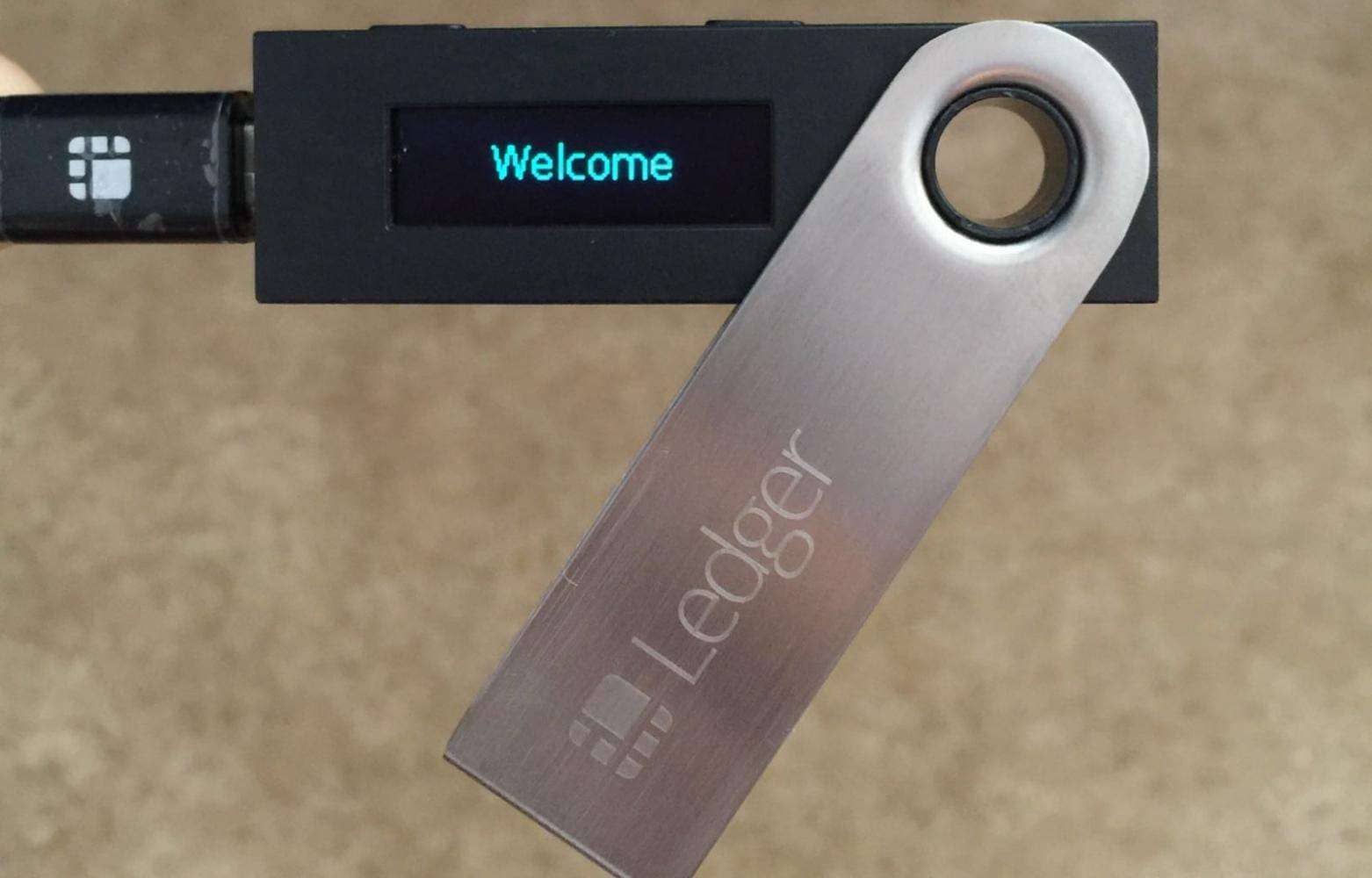
A hash is a function that converts an input of letters and numbers into an encrypted output of a fixed length. Cryptographic hash functions combine message-passing capabilities with security https://xcritical.com/ properties. Encryption underlies the security and functionality of decentralized cryptocurrencies, such as Bitcoin. The new Edxxx algorithms offer the best sign / validate performance mix.
Key Interfaces
Some may be platform-independent, while others may be platform-specific. Some provider source code may be available for review and evaluation, while some may not. The JCA lets both end-users and developers decide what their needs are. AES. The Advanced Encryption Standard is the trusted standard algorithm used by the United States government, as well as other organizations. Although extremely efficient in the 128-bit form, AES also uses 192- and 256-bit keys for very demanding encryption purposes. AES is widely considered invulnerable to all attacks except for brute force.
On the normal Java classpathPlace a zip or JAR file containing the classes anywhere in your classpath. Return an instance of the “SHA-256” MessageDigest and “DH” KeyAgreement objects, respectively.Appendix A contains the list of names that have been standardized for use with the Java environment. Some providers may choose to also include alias names that also refer to the same algorithm. For example, the “SHA256” algorithm might be referred to as “SHA-256”.
- According to Target, the credit card information was encrypted, but the hackers’ sophistication still broke through the encryption.
- The two sides must each establish a new temporary DH public/private keypair using a KeyPairGenerator.
- The provider may need to get its own protection domain in the process of doing self-integrity checking.
- The plaintext needs to be passed via some encryption algorithms, which are basically mathematical calculations to be done on raw information.
- Other Java runtime environments may not necessarily contain these Sun providers, so applications should not request an provider-specific implementation unless it is known that a particular provider will be available.
- It could, for example, beDSAPublicKeySpec.class, to indicate that the key material should be returned in an instance of theDSAPublicKeySpec class.Please see the Examples section for more details.
- You can store the someData bytes in one file, and the signature bytes in another, and send those to Alice.
This framework includes packages such as java.security,javax.crypto, javax.crypto.spec, andjavax.crypto.interfaces. Triple DES. Triple DES is the successor to the original Data Encryption Standard algorithm, created in response to hackers who figured out how to breach DES. It’s symmetric encryption that was once the most widely used symmetric algorithm in the industry, though it’s being gradually phased out.
It is composed of anInputStream, or one of its subclasses, and aCipher. CipherInputStream represents a secure input stream into which a Cipher object has been interposed. Theread methods of CipherInputStream return data that are read from the underlying InputStream but have additionally been processed by the embedded Cipher object. The Cipher object must be fully initialized before being used by a CipherInputStream. Using modes such as CFB and OFB, block ciphers can encrypt data in units smaller than the cipher’s actual block size.
The subclass constructor sets the values of various properties that are required for the Java Cryptography API to look up the algorithms or other facilities the provider implements. In order to be used, a cryptographic provider must first be installed, then registered either statically or dynamically. There are a variety of Sun providers shipped with this release (SUN, SunJCE, SunJSSE,SunRsaSign, etc.) that are already installed and registered. The following sections describe how to install and register additional providers. Since no installed provider implements it, aNoSuchAlgorithmException is thrown. In this section we explain how end-users install the cryptography implementations that fit their needs, and how developers request the implementations that fit theirs.
The Mac Class
The plaintext needs to be passed via some encryption algorithms, which are basically mathematical calculations to be done on raw information. There are multiple encryption algorithms, each of which differs by application and security index. A client with a client_secret can receive ID tokens secured with HMAC or with a signature .
These methods also enable the possibility of secure transfer of hardware-based keys. A Signature object is initialized for signing with a Private Key and is given the data to be signed. The resulting signature bytes are typically kept with the signed data.
Generating Algorithm Parameters
A certificate store implementation for retrieving certificates and CRLs from Collection and LDAP directories, using the PKIX LDAP V2 Schema is also available from the IETF as RFC 2587. The certificate path builder and validator for PKIX is defined by the Internet X.509 Public Key Infrastructure Certificate and CRL Profile, RFC 3280. To generate Diffie-Hellman system parameters, for example, the parameter generation values usually consist of the size of the prime modulus and the size of the random exponent, both specified in number of bits.
Fortunately, the keys do all the actual encryption/decryption work, leaving both people more time to contemplate the smoldering ruins of their relationship in total privacy. A woman wants to send her boyfriend a personal text, so she encrypts it using specialized software that scrambles the data into what appears to be unreadable gibberish. She then sends the message out, and her boyfriend, in turn, uses the correct decryption to translate it.
Venafi hereby grants to You the right to use the Documentation solely in connection with the exercise of Your rights under this Agreement. Other than as explicitly set forth in this Agreement, no right to use, copy, display, or print the Documentation, in whole or in part, is granted. This License is conditioned upon Your compliance with all of Your obligations under this Agreement. Except for the express licenses granted in this Section, no other rights or licenses are granted by Venafi, expressly, by implication, by way of estoppel or otherwise. The Service and Documentation are licensed to Licensee and are not sold. You shall not access the Service if You are Our competitor or if you are acting as a representative or agent of a competitor, except with Our prior written consent.
The context eventually creates end objects which actually implement the SSL/TLS protocol. SSLContexts are initialized with two callback classes, KeyManager andTrustManager, which allow applications to first select authentication material to send and second to verify credentials sent by a peer. The AlgorithmParameterGenerator class is anengine class used to generate a set ofbrand-new parameters suitable for a certain algorithm . This object is used when you do not have an existing set of algorithm parameters, and want to generate one from scratch.
Many internet security experts don’t even consider hashing an actual encryption method, but the line is blurry enough to let the classification stand. The bottom line, it’s an effective way of showing that no one has tampered with the information. A blockchain is a digitally distributed, decentralized, public ledger that exists across a network. Consumers should understand that encryption does not always protect data from hacking. For example, in 2013, hackers attacked Target Corporation and managed to compromise the information of up to 40 million credit cards.